
Sign n°9
Traditions and customs of the old town
Traditions and customs of the old town
The Hellechtsmann plays the role of matchmaker or marriage broker. In a rural society, where isolation is a real issue, the Hellechtsmann would help to facilitate unions between young people of marrying age, ensuring the two families were of a similar financial and social background.
Maison Aloïs
rue de la Porte-Neuve, 40
This modest commercial and residential building provides us with a wonderful example of a decorative façade in an eclectic style. Polychrome bricks add a lively touch to the façade of the upper levels, while the ground floor, used as a business, features a glass front with small, cast-iron columns and blue stone pilasters. The building was built around 1910.
The Laarkol or tanning pits
The tanners of Arlon would leave tannin-rich oak bark to macerate in these two identical pits, each around 4 metres deep. Through this process, they would transform hides into strong, supple leather used to make shoes, among other items. This activity ceased shortly before 1914 as it posed a serious danger to public health.
View of the old town from the fortifications of Saint-Donat’s Church, 1943. Tanners’ houses have been built along the entire length of the wall. Institut Royal du Patrimoine artistique (A044201)
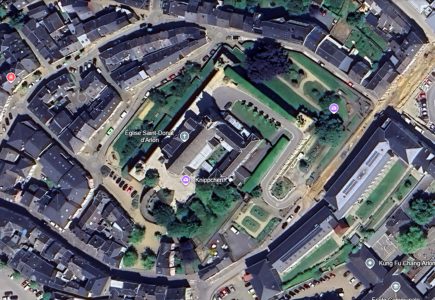

Around Saint-Donat
Sign n°8
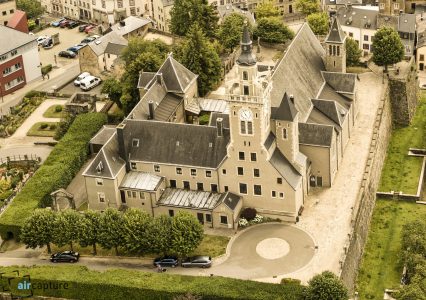
The “eye” of the land
Sign n°10